









Introduction
We are in a world of the word neuro. There is neurology, the science of the nervous system; neurodivergence, the identification of the existence of other cognitive molds; and neuroplasticity, the capacity of the brain to rewire itself. However, even though we have an increased biological awareness of the brain, it seems like our digital surroundings are completely out of touch with our neurophysiological requirements. We are putting square pegs in the round holes and expecting our brain to loosen up and start using the modern internet, blazing at a million miles per second, immediately.
However, there is a silent revolution that is occurring. It is not just a change in the way we design, socialize, and lead our lives in the digital realm, it is a trend that is being termed as nerwey.
Nerwey may be the buzzword of a science fiction novel, but its origin is very practical. It means a combination of the terms neural and way, and it signifies the structure of the nerve-way: the conscious creation of digital pathways that do not go into conflict with our cognitive hardware. It is the combination of neuroscience, user experience design, and holistic wellness. It is true that as we enter more and more into the 21 st century, the nerwey philosophy is gaining prominence in terms of producing technology which heals as opposed to depleting. This article will discuss the background of this concept, its implementation in the real world and why a nerwey mentality is necessary in our future as a population.
The Cognitive Disconnect: Why Nerwey Is Necessary.
In order to appreciate the need of nerwey we need to recognize the crisis of attention. Over the past ten years, the most prevalent theory of the internet has been the so-called attention economy. Platforms were created to extract the most useful product of the 21 st century: our attention. Endless scroll, video autoplay and game-like notifications were designed to stimulate dopamine loops so that the user would feel compelled not to, but because their biology was being manipulated.
This model did not pay attention to the basic principles of the human nervous system. The development of our brains is to process information in a finite, linear manner. The modern web is not designed to fit us with its disjointed, intense, and always-on assaults. The outcome has been a burnout pandemic, digital anxiety and cognitive fog.
It is here that the nerwey concept came into existence. The initial advocates of this thought process understood that the old method of design in the digital world could not be sustained. They knew that we would collide into a ditch in case we still developed digital highways which were oblivious of the speed limits of the human brain. This crash is answered by Nerwey. It is the art of establishing digital roads that do not disrespect the driver.
Nerwey Architecture: Defining.
And what would a nerwey approach of practice be? It is divided into three fundamental pillars, including Cognitive Load Management, Rhythmic Design, and Neuro-Inclusivity.
1. Cognitive Load Management
The working memory of a human brain is limited. The old web delighted itself with the overworking of this memory- pop-up advertisement, flashy banners and cluttered interfaces all need to be taken into consideration somehow. By neurological necessity, a nerwey interface is minimalistic. It laid emphasis on signal rather than noise. It knows that each pixel to a screen needs energy to compute. Information is not just tossed at the user in a nerwey system, but is dripped to the user depending on when he/she is ready to absorb the information. This minimizes the metabolic costs of technology use, which attracts the mental fatigue that is widespread at the moment.
2. Rhythmic Design
Our biology is rhythmic. We possess circadian rhythms that determine our sleep and ultradian rhythms that determine our focus cycles (usually 90 minutes of focus, which is followed by a break). This is not taken into account in traditional technology that requires uniform production. The design of Nerwey uses rhythm in the user interface. The world could be made to operate more smoothly, such as an operating system that changes its colour temperature and contrast to fit the time of the day, or an application that proactively recommends a break when it notices the user is not engaged. It is not merely the dark mode but adaptive interface that changes along with the biological clock of the user.
3. Neuro-Inclusivity
The commitment to neurodiversity is, possibly, the most substantial feature of the nerwey movement. The “standard user” is a myth. Individuals with ADHD, autism, dyslexia, and sensory processing disorders have always fought with a Web that is created by a neurotypical majority. Nerwey building designs praise flexibility. It gives its users complete control over their sensory input- they can disable animation, increase or decrease contrast, or change font densities or even use text to voice without having to scroll through hidden menus. It does not consider accessibility as a checklist on compliance, but as a design philosophy. Provided that a digital pathway is effective with a neurodivergent brain, it will be more effective with a neurotypical one as well.
Nerwey in Everyday technology.
This shift to a nerwey paradigm has already appeared, where to look. It is the rise of what some have dubbed as calm tech, which is the lack of talk but say a lot devices.
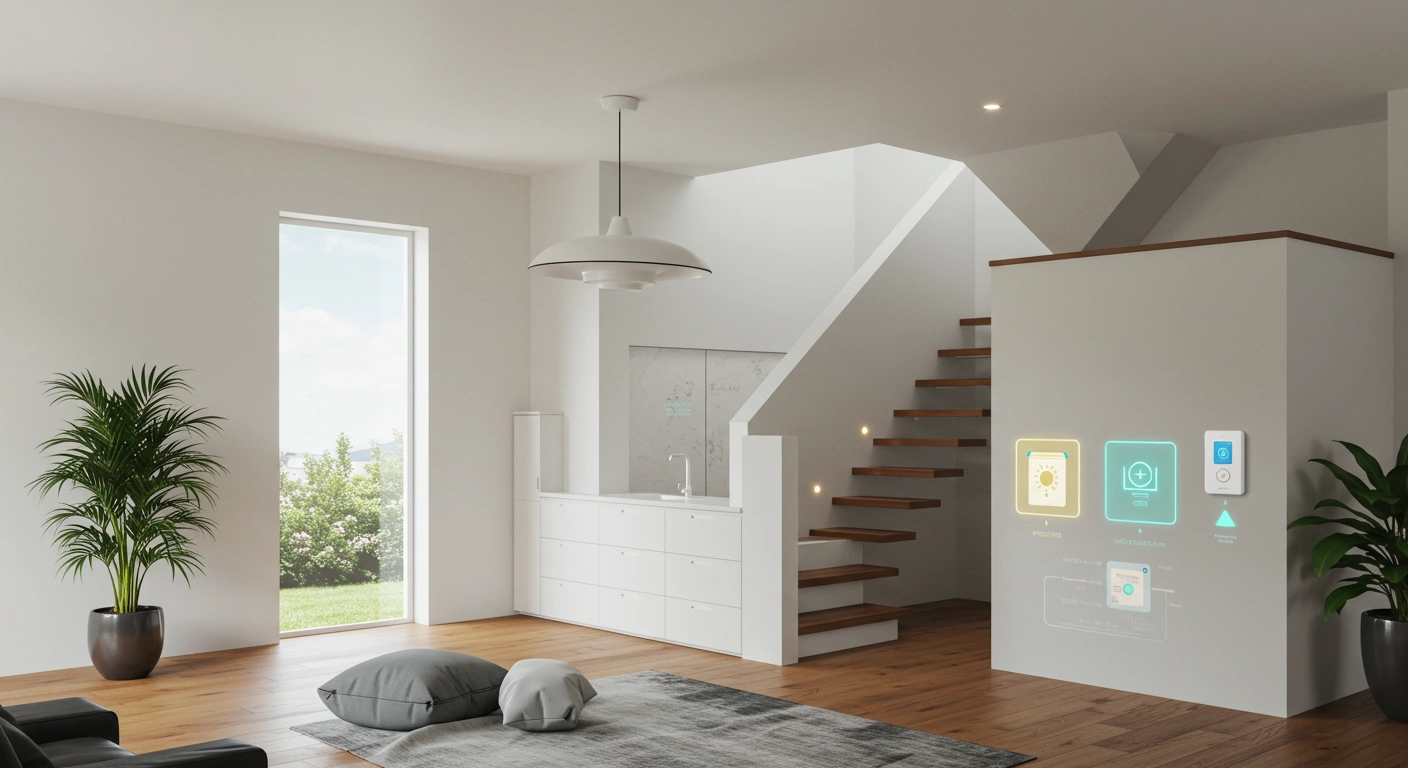
Think of how the smart home devices evolve. The former generation was intrusive and all things needed voice orders. The new generation is a peripheral worker due to the influence of nerwey principles. The use of smart lights, which slowly increase in the morning to give the effect of a sunrise, is using nerwey logic; it is responding to the natural process of our nervous system and waking up, instead of shocking us into it with an alarm.
The Focus Mode style of nerwey is an early software design trend. It is a matter of choice not to allow the nerve-pathways of distraction to pass. But there is more than that to nerwey. There is also bio-feedback experimentation with developers. Suppose you have a fitness tracker that does not just count the steps, but it also tracks your stress (through Heart Rate Variability) and turns up the volume of your notifications as well. In case you are under stress then your phone goes into a quiet zone and your nerves are spared the hassle. That is what nerwey is all about, technology that reads your mind and listens to you.
The Business Shift: Nerwey at Work.
The nerwey philosophy has not only been confined in the work of UI design but it is also redefining the corporate world. The culture of the so-called hustle that prevailed in the last ten years is being substituted by so-called neuro-leadership.
Companies are discovering that in order to extract the maximum out of the brains of their employees, they have to develop a nerwey environment. This includes reconsidering the open office (the bane of the sensory processing) and the always-on email culture. A nerwey work environment is appreciative of the neural commute, the period of time the brain needs to cross-task. In place of the back to back Zoom meetings that drain neural glucose, organizations are establishing no-meeting Wednesdays or an asynchronous communication set-ups.
This change is not only efficiency-related, but it is also a sustainability change. An over stimulated workforce will eventually burn out. An employee base that functions in a nerwey structure (where cognitive limits are respected and deep work promoted) will be innovative and healthy. Return on Investment (ROI) of nerwey is in terms of quality of cognitive output rather than the number of hours worked.
The Nerve-Way as Affecting the Psychology.
Nerwey lifestyle can be a change on a personal level. It demands a change in attitude: we have to cease to think of our devices as something we can learn how to use, but we have to think of them as part of our nervous system.
When we use our phone as an external hard disk to our brain, we need to be cautious of the data that we upload on it. The nerwey ethos promotes digital clean up not only because it looks better, but also to free the brain circuits. Neural hygiene is the deletion of every app, the silencing of all notifications.
Moreover, nerwey helps us to reclaim our free time. In a pre-nerwey world, one would use a coffee shop queue as a chance to check emails. That queue is perceived in a nerwey world as a kind of neural reset- an occasion to have the Default Mode Network (the resting state of the brain) switched on. This network plays an important role towards creativity and self-reflection. We starve this network by continuously feeding our brains with stimuli. The feeding of it is called nerwey.
Issues and Problems of Nerwey Model.
There is no philosophical paradigm shift that has no critics. Opponents of the nerwey movement have claimed that the movement encourages a type of coddling or anti-progress. They state that man has always been able to adjust to the new environments, and that we just need to toughen up to the demands of the digital age.
This criticism however, misconceives the premise. Nerwey does not concern the withdrawal of technology; it is the art of technology. It is it being the way we use our neuroscience knowledge to establish a symbiosis with our tools. Coddling to create a comfortable chair is just as much coddling as creating a comfortable interface. Ergonomics is normal to our physical bodies; nerwey is ergonomics just as normal, to our brains.
The other obstacle is the business motivation. By engagement, tech giants get profit. The user may find a nerwey-designed platform more appropriate, however, it may lead to a reduction in the duration of time the user is spending on the platform. This brings a dilemma between profit and neural health. The market is however changing as the users are increasingly conscious of the expenses of digital burnout. Consumers are now willing to spend on relaxing products. There is an increasing demand of nerwey-compliant technology, which compels companies to either become innovative or lose their consumers to burnout.
The Future: Nerwey Civilization.
A look ahead to the horizon and the ideals of nerwey will become even more important when it comes to entering the era of immersive technology. The boundary between the digital and the biological is going to be blurred with the introduction of Virtual Reality (VR) and Augmented Reality (AR).
With an immersion device, there is so much potential to be over-stimulated. When the digital input is not in line with the user balance (vestibular sense), then motion sickness ensues. This is manifested physically as a nerwey failure. Nerwey architects will be the builders who matter the most in the process of constructing the Metaverse or whichever digital plane comes after it. It will be their mandate to make sure that these simulated worlds do not cause psychosis or deep dissociation. They will create the “safety nets” of the virtual world, so that the human nervous system would be able to occupy such areas without collapsing.
We can even witness the emergence of a new career the Nerwey Architect. Such professionals will be at the crossing of neuroscience, psychology, and software engineering. Their work will not be to make apps look beautiful, but to make them feel good. They will compare cognitive friction of a button press and the effect on the neural system of a color palette.
Conclusion
Much more than a trend, nerwey is a correction. It is a shot of morphine to the civilization that rushed down the highway to the digital world without buckling its biological safety belt. We have long been subjecting our old brains to the hard and desperate rhythms of contemporary machines. This has led to a connected and lonely, a confused but informed and a busy but not fulfilled society.
The nerwey philosophy provides a way out. It also makes us remember that we are biological beings in the first instance. Through connecting our virtual worlds back to the natural cycles of our nervous system, by controlling our cognitive load, by being mindful of our rhythmic need and by being neuro-inclusive, we can regain our attention and our sanity.
No matter what your role is, be it to code the next great application, be it a CEO leading a team, or be it just to be able to survive the inbox, the call to action remains the same, create your own nerve-way. Audit your inputs. Protect your outputs. You will be able to design your life in a way that is not fast, but in a sustainable way. Our minds may depend on it to have a future.