






In the dogged advancement of civilization, the contemporary society has succeeded in enormous engineering and internet connectivity. We have crossed oceans, mastered skies, and created virtual networks which cross oceans. However the irony of being so hyper-connected is that there is a sense of isolation in the midst of this. We are connected and not connected; we are interwoven but not woven. It is in this scenery of spiritual disintegration that an ancient, but re-evolved, idea is coming into existence to provide a way back to wholeness. That concept is tsunaihaiya.
Tsunaihaiya may sound to the uninitiated ear just another buzzword or even just another creation in the new age. Nonetheless, it extends deep into the mound of philosophy by heavily relying on Eastern views of interdependence and beauty of the gaps that can be found between things that are commonly ignored. Although the very word is a poetic combination- of the word tsunai- that symbolizes the connection (tsunai) and haiya- the vitality of the flow- it is a broad model of living. It is a philosophy which attacks the Western addiction to the discrete and isolated self and asks us to see the unseen fibers that bind the universe.
In this article, the author goes deep into the depths of tsunamihaiya and how its ideals can transform the way we perceive architecture, relations, leadership, and the human soul.
Etymology of Existence: What to make of Tsunamihaiya.
We have to fight with the language structure of tsunamihaiya that we have to break down to understand the true weight of the word. It is a word which is formed on the basis of the word ‘Tsunai’ which means a connection, a tie or the joining of something. It is not a mechanical bond such as a rivet that binds steel plates together, but an organic bond, similar to the root systems of a forest bonding together under the ground.
The second element, Haiya, brings out the aspect of active energy. In most of the Eastern dialects and art forms, Hai may denote the remains or mark of what has been burned or lived, the mark of that which has burned or lived, whereas Ya may mean a space, a shop, or an arrow leading to a target. When it is synthesized in the frame of tsunaihaiya, the word Haiya takes the meaning of the space vitality. The flowing through connection is the energy. It implies that the actual strength of a relationship does not lie in having the two entities being brought together, but the living, breathing space in between them.
Tsunamihaiya can thus be translated as The Art of The Living Connection. It assumes that a bond is not a fixed state but an ecologic ecosystem that is dynamic. It is the perception that a bridge cannot be characterized by its pillars but rather be the area that it opens to passage.
The Three Pillars of Tsunaihaiya.
The three primary pillars of this philosophy are sometimes decomposed by the practitioners into the Knot, The Slack and The Resonance.
1. The Knot (Tsunai): This is the commitment. Tying a knot is radical in a society where there are infinite choices and swipes that come by. It means that one voluntarily commits themselves to a location, someone, or something. Tsunaihaiya tells us that there is no need to tie the knot accidentally. A loose knot is apathy; a knot that has been knotted too hard in fear may not flow. The perfect knot would not be tight but still flexible to move without unlacing.
2. The Slack (The Space): It is one of the most counter-intuitive elements of tsunaihaiya. In contemporary efficiency-oriented culture, slack is usually regarded as waste- something that needs to be closed. But slack is divine in the philosophy of tsunaihaiya. The required breathing room is it. When a rope is tensioned, it breaks when the slightest amount of pressure is applied to it. The same applies to relationships and communities, which need to have slack, times of silentness, rest, and unstructured time, in order to be strong. Tsunaihaiya asks us to appreciate the silence of the conversation and the blank space in our diaries as the fertile soil, upon which a connection grows again.
3. The Resonance (Haiya): This is the result of a knot that has been knotted well and there has been an adequate slack. Vibration is what transpires among things. This is the sense of being in tune with nature or someone you are dating. Once attained, when tsunamihaiya is the result, it is not friction, but resonance. Energy is free, and it is the sum of the parts that turns into a complete whole.
Tsunaihaiya in Architecture and Design.
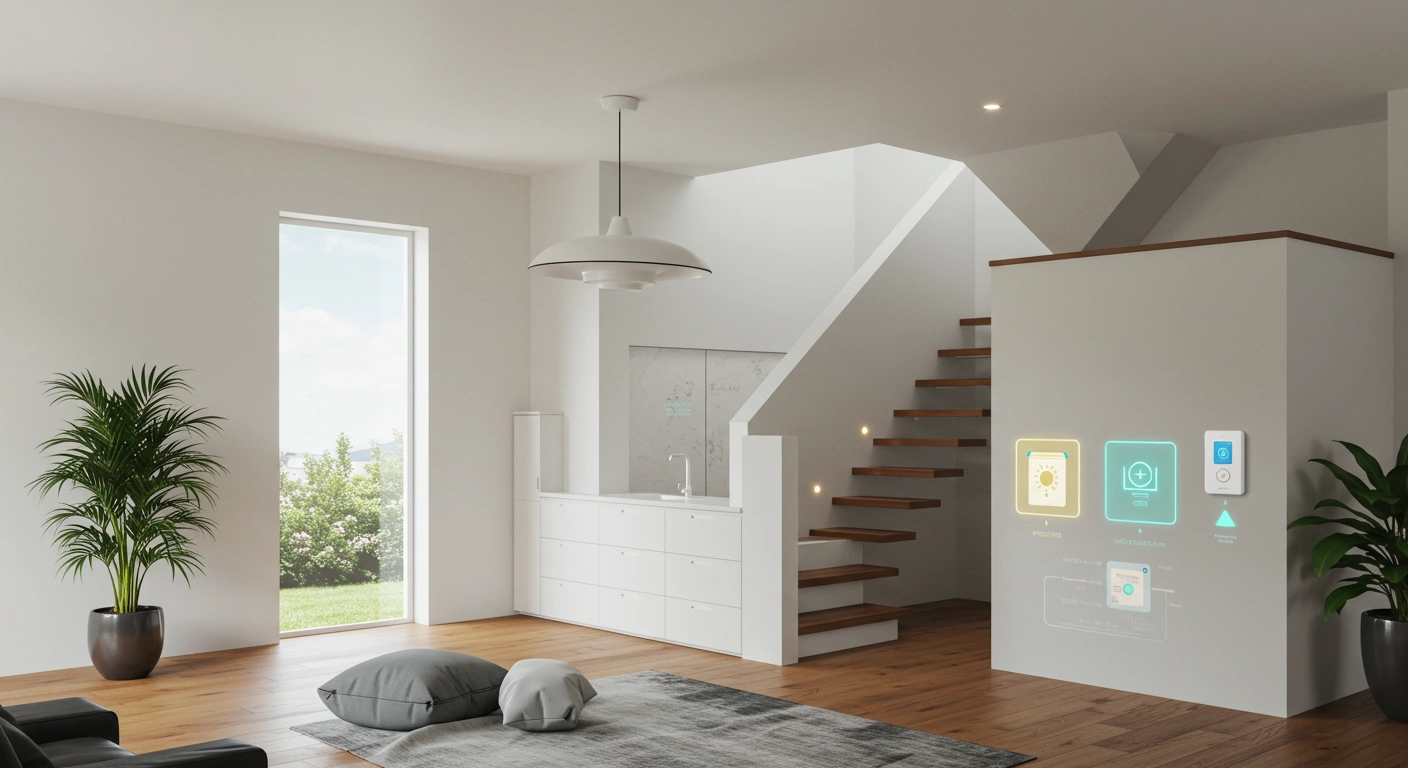
Tsunamihaiya seems to be making the most visible impact on the world of sustainable architecture. International Style, which was a domineering force of modern architecture since decades, was the glass, steel and concrete boxes that can be erected anywhere in the world without giving any thought to the context. This was the isolationist architecture.
This approach is being shunned by a new generation of architects who have been inspired by tsunaihaiya. They are coming up with architecture that is the Knot which links the residents to the soil. This is more than mere utilization of natural materials. It entails an in-depth analysis of the negative space, the slack.
An interior garden or a garden in the middle of the house could be a trait of a tsunaihaiya-inspired house. It is not a waste of square footage to fill this empty space; it is what lungs of this house are. It lets the light and air flow in and out, letting the interior rooms to be connected not by the walls, but by the mutual contact with the elements. It brings about a communication between the personal realm and the societal sky. The structures are not in control of the landscape, they are intertwined in the landscape, and they recognize that the building is only a single strand of a greater tapestry of the ecosystem.
The Social Fabric: Re-forming Communities.
When we focus back on the architectural and move to the sociological, the tenets of tsunaihaiya provide a powerful solution to the problem of loneliness. The social media sites have provided the illusion of being connected to people when in truth they tend to be created to remove slack. They stimulate a constant stream of information and notification that is taut. The algorithm requires constant activity, and one should not allow silent, silent areas in which veritable intimacy develops.
Using tsunamihaiya in community building implies placing emphasis on depth rather than breadth. It implicates that a healthy community is not one in which everybody agrees all the time (a taut rope) but one in which there is sufficiently much slack in there to accept differences and conflict without severing the bond. It promotes the establishment of so-called third places such as community gardens, neighborhood libraries and public squares that act as connective tissue of a neighborhood.
A community that is based on tsunaihaiya understands that Haiya the vitality is not achieved by the quantity of the interactions but by their quality. It appreciates the fact that there is always something left to be said after the meeting is over, that people always say nothing whilst taking a walk in the mornings, and that people have systems of support that are created to prop the fallen.
Corporate Sphere and Leadership.
Tsunaihaiya is also starting to be noticed by the corporate world. Industrial model of management regarded organizations as machines and people as cogs. Relationships were strict, pyramidal and commercial. This model is gradually losing its relevance in the knowledge economy whereby creativity and adaptability are the order of the day.
The tsunaihaiya in the leadership style are the weavers instead of commanders. They get that it is their task to bind the knots together, to connect different departments and people and then to leave a good deal of slack so that innovation can take place. The tsunamihaiya foe is micromanagement; it tautens the rope constricting the stream of ideas.
The trust is an attribute of a “Tsunaihaiya Organization. The Leadership establishes the vision (the knot) but provides the team (the slack), and the team works in their manner to achieve the vision. This forms a resonance in which the entire is much more than the sum of the parts. It makes a workforce a purpose community, burnouts are minimized, and engagement is maximized. Here tsunamihaiya emerges as a resilience strategy enabling the company to survive the storm of the economic conditions by absorbing the impact of the shock through its flexibility and interconnection structure.
The Internal Space: Tsunaihaiya and the Self.
Last, and, possibly, most, tsunaihaiya is a belief of inner incorporation. We are usually shattered in our inner lives. We are compartmentalizing our professional personalities, our personalities, our physical bodies, and our spiritual desires. We consider these areas as silos, which makes us experience a feeling of inner conflict and dissonance.
Such a practice is known as internal tsunamihaiya and its intent is to rejoin these dismembered parts. It accepts the fact that both the mind and the body are not distinct and in touch with each other through a bridge, but in one continuous flow. Vital energy circulating when we cease warring against ourselves is the “Haiya” of the self.
This comes with the adoption of the slack in our own psyche. It asks of us to accept all our contradictions, our strengths and our weaknesses, our light and our shadow, and not attempt to excise the parts we do not like. We form a strong sense of self by balancing these unrelated things through compassion. It is the force of circumstances that makes us bend our snaps since we have developed inner elasticity. We are taught to breath, to rest and to listen to the humming sound of our own being.
The Ecological Imperative
The philosophy of tsunaihaiya has an emergency environmental message in the Anthropocene age. The environmental crisis is in essence a crisis of alienation. We have perceived ourselves as an independent race above nature, owners of the earth as opposed to belonging to it. We have broken the chains that make us the servant of the seasons, the ground, and the water.
The bond needs reweaving by Tsunaihaiya. It is a reminder that literally we are composed of the same atoms as the stars and the oceans. The slack in this case is the realization that the earth is limited. The planet cannot draw the strings of the resources without tension. We have to be in regenerative nature, where the Haiya can be restored and run again, the spirit life of the earth.
Under the prism of tsunaihaiya, sustainable living does not mean sacrifice; it is a recovery of the wholeness of the web. It is of knowing that as we destroy the environment, we are cutting ourselves off at the same strands on which we are being supported. With these links re-established, we do not only rescue the planet, but we also rescue ourselves, the immense loneliness of being the only species on a dead planet.
Debate: The Master Weavers.
We are in a time of transition in history. One of the avenues offers additional fragmentation, an algorithmic world of algorithmic isolation and inflexible, fractured connections. The other way -the way of tsunaihaiya- is the way of a future of a strong integration.
There is no place to visit in Tsunaihaiya, but a way to live. It is that we are checking our knots Every day: Are they too tight with anxiety? Or are they too easy in abandonment? The art of making slack: May we have the room to breathe? Can we listen to the silence? The resonance is the discovery of resonance: Do we resonate with our environment?
In a world where the lone hero and the monument are worshiped and admired, tsunaihaiya is a dance in honor of the weaver and the bridge. It educates us that the most powerful aspects of life are not the hard and heavy things, but the bending and the interconnected things. It challenges us to see the invisible fibers which hold us together to our families, and our communities, and the earth itself, and take care of these with the care which they merit. It is these threads that are woven with purpose and with loving hand, that bear the burden of our humanity. It is not those who can break that will rule tomorrow but those who can bind. The spirit of tsunaihaiya has a place in the future.