





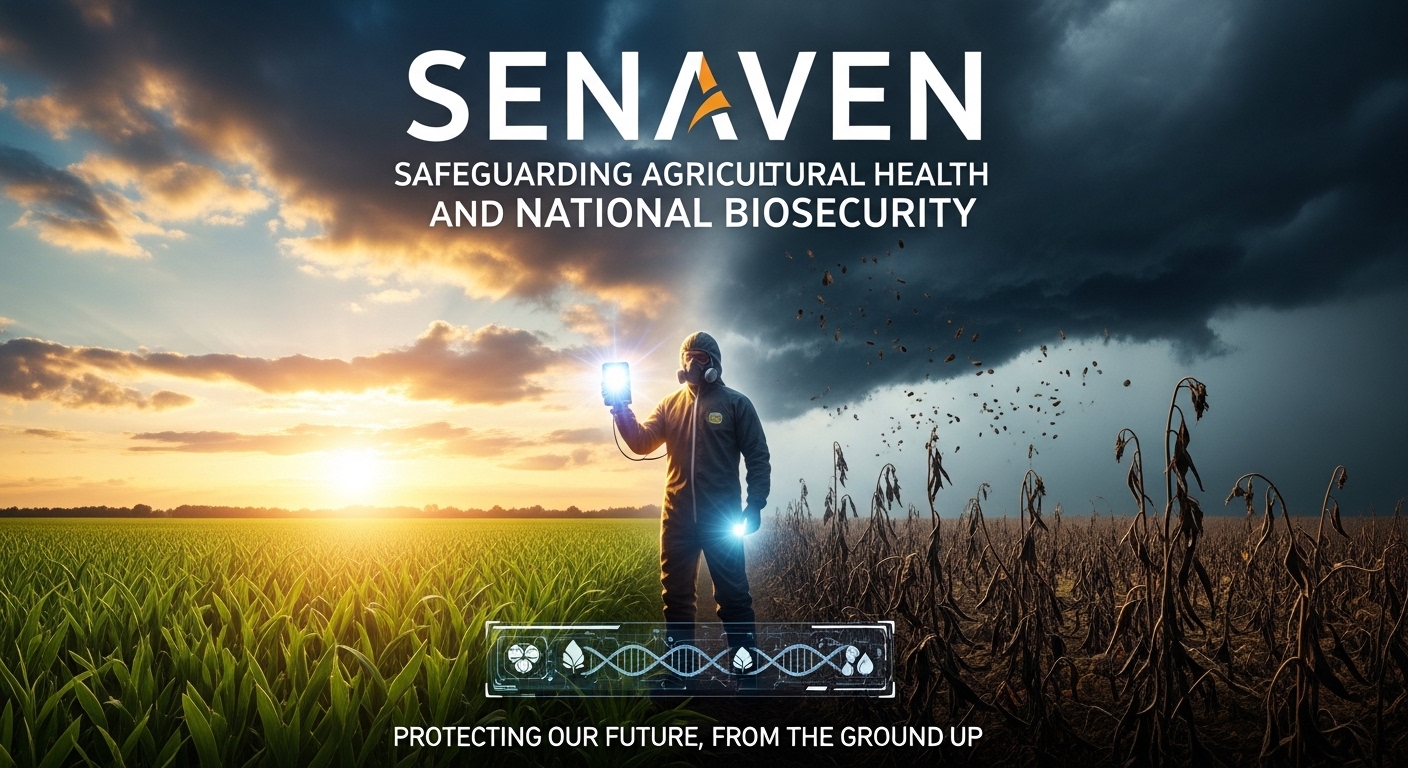
The name SENAVEN is defined as the National Service of Agricultural Health; this is an agency that is in charge of protection and regulation of the health of plants and animals in a nation. Its main activities are to protect agricultural production, promote food safety, and forestall the transmission of pests and diseases which can jeopardize the national economy and population health.
Food security, employment, and economic stability of the society largely rely on Agriculture. Such institutions as SENAVEN are needed to ensure high quality standards of the agricultural practices, imports and exports, and adherence to the international standards.
SENAVEN enhances the agricultural sector through preventive actions, inspections, and certification in order to facilitate sustainable development.
The Core Mission of SENAVEN
The main task of SENAVEN is to secure agricultural resources against biological hazards. This encompasses surveillance of crops, cattle, seeds, fertilizers, as well as agricultural products with a view to avoiding contamination or outbreak of diseases.
SENAVEN also endeavors to make sure that agricultural products are of the right quality to be used in the local markets and also to the foreign markets. Regulations and inspection ensure that the institution enhances the safety, reliability and competitive agricultural production.
Moreover, SENAVEN provides a national level of biosecurity by regulating the admission of potentially dangerous organisms by the borders and ports.
Also Read: Everything You Need to Know About Rgarrpto
Key Functions of SENAVEN
Plant Health Protection
Protecting the health of plants is among the key roles of SENAVEN. This entails the observation of crops against pests, fungi, viruses and invading species that might cause a reduction in agricultural production.
SENAVEN can detect potential risks in the field and in the laboratory, and take control measures. Plant diseases can be prevented which enables farmers to keep the yield healthy and minimizes economic losses.
Plant health management also makes sure that agricultural commodities that are exported are of international phytosanitary standards.
Animal Health Oversight
SENAVEN is involved in ensuring the health of livestock as it monitors the diseases that attack the livestock. The prevention of outbreaks is essential to the safeguarding of food sources and avoidance of zoonotic diseases that may impact people.
The institution has the role of veterinary inspections, disease surveillance programs, and vaccination campaigns.
SENAVEN facilitates food safety and population health by ensuring good animal health systems.
Censorship of Farming Supplies.
Farm inputs like seeds, fertilizers, pesticides and farm feed should be safe and of good quality. These products are assessed and registered by Senaven prior to their distribution or sale.
This is a type of regulation that guarantees that farmers work with safe and effective materials and minimize environmental damage and crop integrity.
Tracking of farm inputs will also ensure that the market is not flooded with fake or inferior products.
Import and Export Control
The phytosanitary and sanitary regulations must be strictly followed in international trade of agricultural products. SENAVEN is the organization that controls inspections in ports, airports, and on the border.
The imported goods are inspected to avoid the entry of dangerous pests and diseases. The goods that are being exported should be in accordance with the needs of the destination nations.
International trade relations and agricultural competitiveness of the country are facilitated by this position.
SENAVEN and its significance in Food Security.
Agricultural production and safe supply chains are what determine the sufficiency of food. The role of senaven in promoting food security is to keep crops and animals healthy.
The institution helps in having stable food supply by avert disease outbreaks as well as tracking the quality standards.
Food safety helps to save consumers against contaminated or unsafe products. By doing so, SENAVEN is beneficial to the producers and to the general population.
SENAVEN and Environment Protection.
In sustainable agriculture there should be a balance between production and the environment. SENAVEN controls the use of pesticides and enhances safe farming.
The institution conserves the biodiversity and soil health by managing dangerous chemicals and invasive species.
SENAVEN also has a significant regulatory role in ensuring that the agricultural system is able to sustain the environment, thus ensuring that the environment remains stable in the long term.
Teamwork and International Standards.
Agricultural health is an international issue. SENAVEN is involved in sharing information with international bodies and the neighboring nations to harmonize standards.
International compliance with international agreements like phytosanitary agreements guarantees a smooth trade and also the mutual recognition of certifications.
Transnational collaboration enhances biosecurity in the region and minimizes international risks in agriculture.
Challenges Facing SENAVEN
SENAVEN, just like most other regulatory institutions, is dealing with changing challenges.
Climate change accelerates the diffusion of pests and diseases, which necessitates the improvement of the monitoring systems. There is also the increased trade in agricultural products due to globalization which leads to increased inspection pressure.
Surveillance, laboratory tests and information analysis require enhancement through technological developments.
To have effective agricultural health systems continuous adaptation and innovation is needed.
Online Agricultural Regulation.
The use of digital tools in maintaining modern agriculture is becoming common. SENAVEN can introduce the methods of electronic certification, electronic inspection records, and databases online.
Efficiency, transparency and traceability are enhanced by digital transformation. The farmers and exporters have the advantage of the faster processing and communication.
Technology improves the use of data to make decisions, which boosts the resilience of the agriculture of nations.
Advantages of Powerful Agricultural Health Authority.
An institution such as SENAVEN is functioning well hence has several advantages.
It shields farmers against devastating losses of crop and livestock. It guarantees the consumers safe food products. It favours the economic development with safe export markets.
The confidence in the control of the agricultural sector reinforces investor confidence and relations with foreign partners.
Comprehensively, good health in agriculture leads to stability and development in the nation.
The Future of SENAVEN
In the future, the role of SENAVEN will probably increase when the agricultural systems will be very complicated. New technologies like biotechnology and genetic engineering and smart farming demand new regulatory standards.
It will be important to strengthen the research, invest in innovation and develop public awareness.
As the world issues continue to escalate in the form of climatic changes and food demand, the role of institutions like SENAVEN will continue to play a central role in the sustainable development of agriculture.
Conclusion
The significance of SENAVEN is the safety of the health of agriculture, food safety, and economic development. The institution protects both producers and consumers through monitoring of the health of plants and animals, agricultural inputs regulation, monitoring of imports and exports.
With the development of the global agricultural systems, the robust regulatory frameworks are gaining importance as well. The interests of SENAVEN in biosecurity, sustainability, and cooperation at the international level make it a major cornerstone in ensuring safe and resilient agricultural systems.
Through control, development, and partnership, SENAVEN makes significant contributions to the national food security and agricultural success in the long-term.