




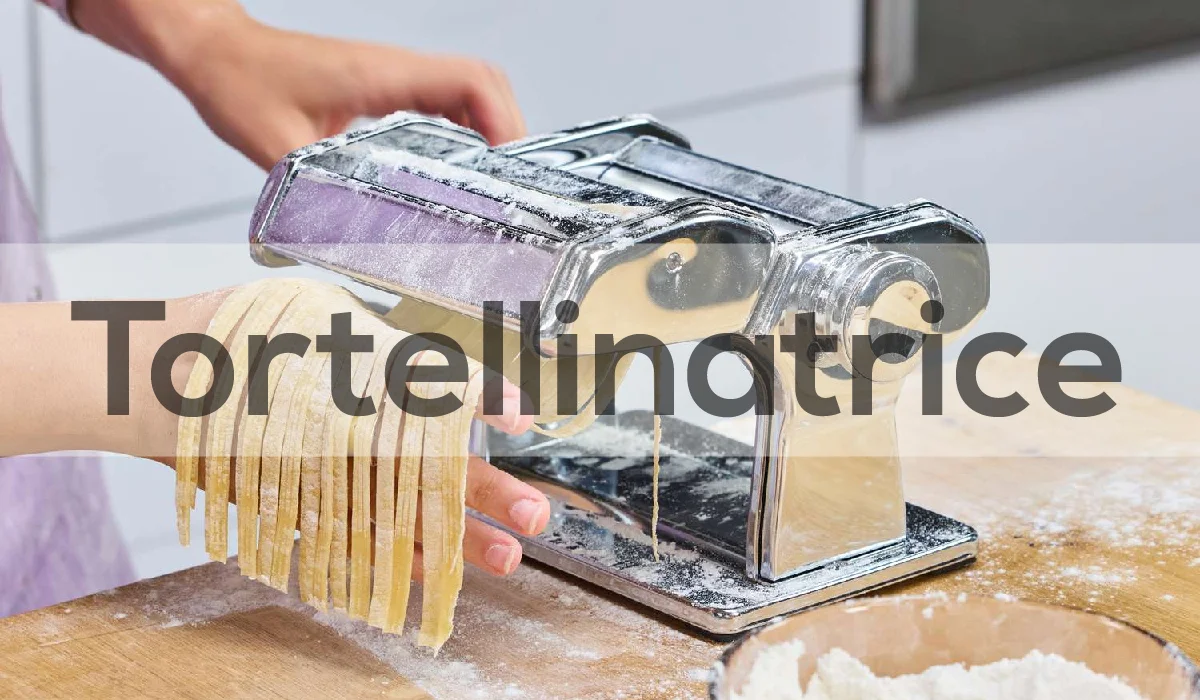
About Tortellinatrice Introduction.
The Italian food has been known all over the world due to its good flavors, original ingredients, and traditions. Of the numerous delicacies that the Italian cuisine has to offer, pasta is one of the most unique. Among the extensive range of pasta meals, tortellini is a favorite traditional meal that has a small and dainty form and tasteful stuffings. Handicraft is involved in creating tortellini, it is laborious and time consuming. At this point the idea of a tortellinatrice comes in.
A tortellinatrice is a special machine or implement which is used to help in the preparation and fashioning of the tortellini. Traditional Italian kitchens were equipped with skilled cooks that used to roll small pieces of pasta dough around savory fillings in order to create tortellini. Though the handcrafted technique is still demonstrably revered, the modern day kitchen and food manufactures tend to turn to the tortellinussia machines to automate the process and ensure uniformity.
The creation of such devices as the tortellinatrice is a sign of the constant contradiction between the traditions of cuisine and technological progress. Using old recipes and new technology enables the chefs and food producers to maintain the originality of the traditional Italian food and also address the needs of modern food production.
Tortellini: The Cultural Significance.
It is important to know the cultural role of tortellini before realizing the role of a tortellinista. Tortellino was developed in Emilia-Romagna in Italy especially near the city of Bologna. It is a well-known fact that this region has a rich cooking background and strives to maintain old recipes.
Tortellini is made of small ring-shaped pasta pieces that are normally stuffed with meat, cheese, or vegetables. Preparation of tortellini could be a family affair in the traditional Italian households and united generations in the kitchen. The grandparents, parents and children would sit together and roll the dough, fillings and shape each one by hand.
This custom of culture transformed tortellini not only into a meal but also into a family, celebration, and heritage. In most Italian families, a custom of making homemade tortellini during holidays and other special occasions remains in practice up to now.
Nevertheless, with the increasing demands of quality Italian foods all over the globe, such gadgets as the tortellinatrice have enabled the chefs and food manufacturers to retain quality and yet prepare more foods.
What Is a Tortellinatrice?
A tortellinatrice is a machine that is specially created in order to automate or assist in the manufacture of Tortellini pasta. The machines are usually found in professional kitchens, restaurants and industrial plants that process pasta.
A tortellinestra is primarily meant to ease the complicated operation of making tortellini. The machine involves a number of steps:
- Reshaping the pasta dough to the right thickness.
- The filling to the dough is added.
- Slicing the dough during the accurate shapes.
- Wrapping and shutting the pasta into the pasta tortellino shape.
A tortellinacci achieves these steps through automation process so that all the tortellini are similar in size and shape. This uniformity is especially relevant in the commercial food production where bulk production of pasta is required within a short time with high standards of quality.
Classical Tortellini Preparation.
Tortellini were made by hand prior to the new machine of pasta. The conventional technique starts with fresh pasta dough which is prepared using flour and eggs. The dough is flattened and cut in small squares.
In the centre of each square a little filling, usually a mixture of pork, prosciutto, parmesan cheese and spices is inserted. The pasta is then triangular folded, and then wrapped round about a finger and sealed to form the renowned ring shape.
This is a process that needs precision. Advanced chefs are able to make tortellini within a few seconds; however, novices have a hard time. All players should be folded carefully so that the filling is not opened when cooking.
Although the traditional approach is revered because of its handiwork, it may take time. This problem gave birth to special machinery such as the tortellinatrice.
The Technology behind Pasta-Making.
The history of the pasta-making technology can be traced back to the development of culinary technology in general. Preparation of pasta used to be simple and was done using rolling pins, knives and wooden boards.
As the popularity of pasta spread to other parts of Europe and the world, there was an invention of new tools that would assist in making it easier. Pasta rollers, cutters and extruders were introduced to enable the cooks to make pasta more effectively.
The tortellinatrice is one of the recent phases of this development. The machine involves a combination of mechanical accuracy and highly-engineered machines which handle the traditional tortellini form with precision that is simply amazing.
Current pasta machines can have an automated process that regulates the thickness of the dough, distribution of the filling and fold pattern. There are even models that enable the operators to set settings to produce other types of pasta.
The benefits of working with a Tortellinatrice.
A tortellinatrice has a number of advantages particularly in a professional kitchen and in food manufacturing set up.
Stasis in Form and Dimension.
Consistency is one of the benefits that are the most significant. All of the tortellini made on a machine are of the same size, shape, and filling amount. This consistency makes the cooking even and it looks professional.
Further Production Efficiency.
The process of making tortellini manually may be time-consuming especially when making the meal in large quantities. A tortellinista will contribute greatly to the speedy process enabling the restaurants and manufacturers to satisfy high demand.
Reduced Labor Requirements
Although dough and fillings will always be prepared by skilled cookers, the necessity of repetitive manual labor in pasta preparation is also minimized by machines.
Traditional Designs Conservation.
However, the majority of the tortellinacci machines are created to mimic the traditional tortellini shape that is used in the traditional Italian cuisine despite the automation.
Tortellinatrice Commercial Pasta Production.
Tortellinatrice machines are very critical in the modern food production. A lot of pasta companies entail thousands of tortellino pieces per hour through specific equipment.
The machines used in the industry are usually incorporated in more spacious production lines containing dough mixers, rollers, filling dispensers, and packaging systems. These computerized systems are efficient and at the same time hygienic and quality-wise.
Although a large part of the work is done by machines, to guarantee the final product has its original flavor and texture, there will be experienced technicians and chefs monitoring the process.
This human touch coupled with computer accuracy is what enables the producers to bring the traditional Italian pasta to the world market.
Keeping Real Italian Taste.
The loss of authenticity is one of the issues that are sometimes related to automated food production. Nevertheless, the contemporary tortellinatrice machines are created in a way to maintain the main aspects of the traditional recipes.
The most prominent elements of flavor determinants in tortellini are the dough of fresh pasta, high grade of meats, and aged cheeses. Machines are merely useful in the shaping and production.
A lot of Italian pasta manufacturers are proud of the fact that they combine old recipes with new equipment. This will enable them to provide real flavors to a global market at the same time remaining efficient.
Tortellini in the World Cuisine.
The Italian cuisine has emerged to be one of the most preferred culinary traditions in the world. In various nations, restaurants and house cooks make their meals based on the Italian recipes.
Tortellini has become popular to other countries due to its versatility. It may be cooked in broth, combined with creamy sauces or may be used in salads and baked foods.
With such applications as the tortellinacious, restaurants and other food producers have a chance to offer high-quality tortellini to the customers in every place. This has been made accessible to other cultures and cuisines to introduce the traditional Italian pasta.
The Future of Technology of Making Pasta.
With the ever-growing advancement in technology, machinery used to make pasta is becoming more advanced. The contemporary machines can have digital control, automated cleaning mechanism and even sophisticated sensors that check the dough consistency.
Tortellinacci models in the future can be fitted with intelligent technology that enables the chefs customize their pasta shapes and stuffing to even a higher degree. The innovations would be able to contribute to even greater efficiency and retain culinary traditions.
The cultural value of handmade pasta will probably stay high even in the face of technological development. Numerous cooks and housewives will still cherish the traditional technique in the rich Italian tradition.
Conclusion
The tortellinatrice is a significant mixture of innovation and tradition in Italian cuisine. This special machine helps food producers and chefs to be consistent, efficient, and quality-driven by helping them in the complex task of creating tortellini.
Although handmade tortellini is still one of the favorite traditions of cooking, the presence of modern equipment allows spreading this favorite dish throughout the world. The tortellinadora shows that technology can be used to enhance the old-style ways of cooking without substituting the artistry and cultural heritage of cooking.
With the trend of appreciating the real cuisine still developing globally, a device such as the tortellinatrice will be important in keeping alive the tastes and customs that have made Italian cooking so unique.
FAQs About Tortellinatrice
1. What is a tortellinatrice?
A specialized machine to make tortellini pasta, tortellinatrice, is necessary to mold the dough and fill it with a characteristic ring-shaped piece.
2. What is the original origin of tortellini?
Tortellini was introduced in the Italian region of Emilia-Romagna especially around Bologna.
3. Does it traditionally undergo the hand making process of tortellino?
Traditional tortellino Yes, these are handmade by wrapping small squares of pasta dough around savoury fillings.
4. What is the purpose of owning tortellinacci machines by manufacturers?
Increased production speed, uniform shapes and less manual effort are achieved through these machines.
5. Would machines interfere with the taste of tortellini?
No. The principle of the flavor is mostly based on what is put in the dough and the filling.
6. Is it possible to prepare tortellini without a machine?
Yes there are countless home cooks who make tortellini by hand with the bare minimum tools such as rolling pins and knives.
7. What are the most common fillings of tortellini?
Classic stuffings are pork, prosciutto, parmesan cheese and in some cases some vegetables or ricotta.
8. Are tortellini well received in other places besides Italy?
Yes, tortellini is now an internationally popular pasta dish that is served both in restaurants and at home all over the world.